

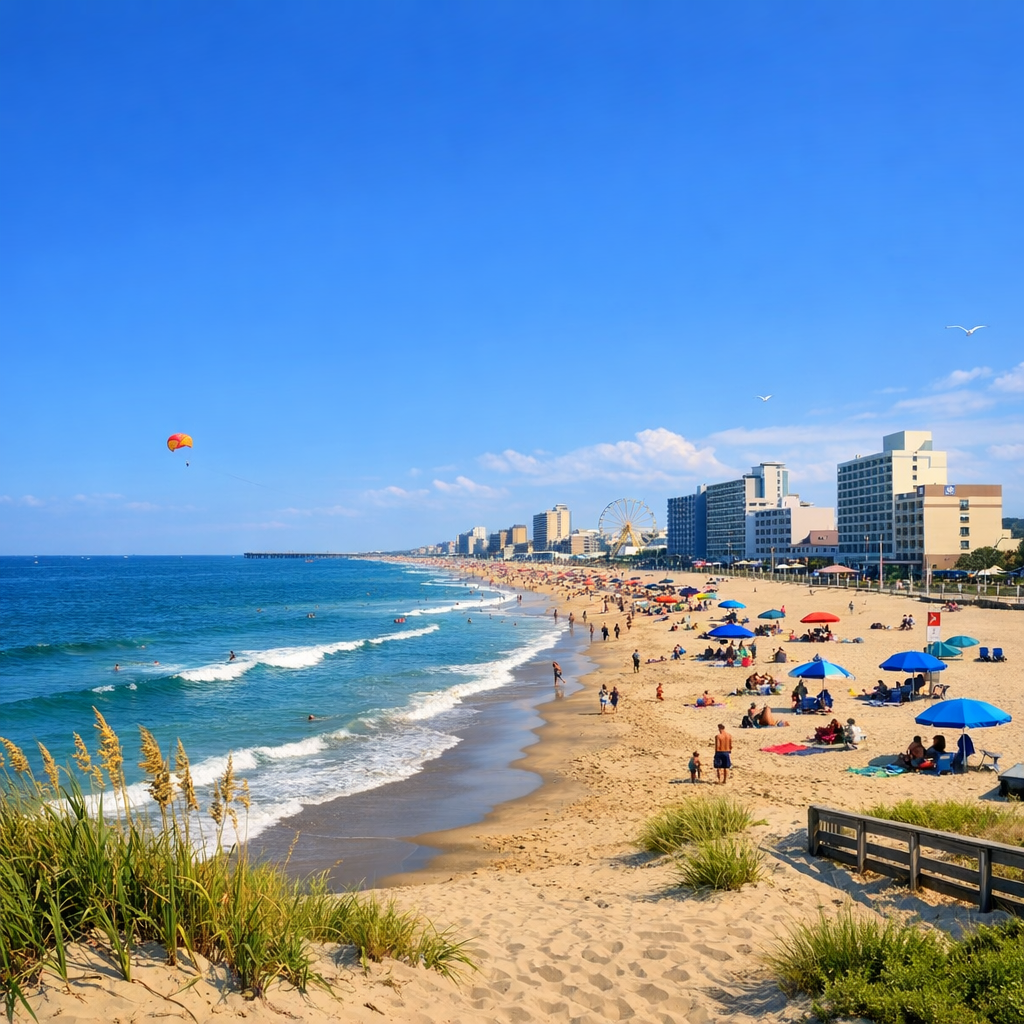
Virginia Beach, located along the Atlantic coast, experiences a humid subtropical climate characterized by hot, humid summers and mild winters. This climate offers a variety of seasonal experiences for both residents and visitors.
Seasonal Overview
Spring (March – May)
Spring in Virginia Beach brings mild temperatures, with average highs ranging from 59°F (15°C) in March to 76°F (24°C) in May. This season is marked by blooming flora and is ideal for outdoor activities. Rainfall is moderate, averaging around 3.5 inches per month.
Summer (June – August)
Summers are warm and humid, with average high temperatures peaking at 88°F (31°C) in July. The season also sees the highest rainfall, particularly in August, which averages over 5.5 inches. Despite the humidity, the ocean breeze provides some relief, making it a popular time for beachgoers.
Autumn (September – November)
Autumn offers cooler temperatures and reduced humidity, with average highs decreasing from 81°F (27°C) in September to 62°F (17°C) in November. The fall foliage adds to the scenic beauty, and the ocean remains warm enough for swimming into early October.
Winter (December – February)
Winters are generally mild, with average high temperatures around 50°F (10°C) in January. Snowfall is rare, averaging about 5.8 inches annually, and when it does occur, it typically melts quickly.
Environmental Considerations
Virginia Beach’s coastal location makes it susceptible to tropical storms and hurricanes, particularly from June through November. Residents are encouraged to stay informed about weather advisories during this period. Additionally, the city’s Environmental Health Office provides resources and services to ensure public health and environmental protection.
Understanding these climate patterns can help residents and visitors make informed decisions about activities and preparedness throughout the year.