

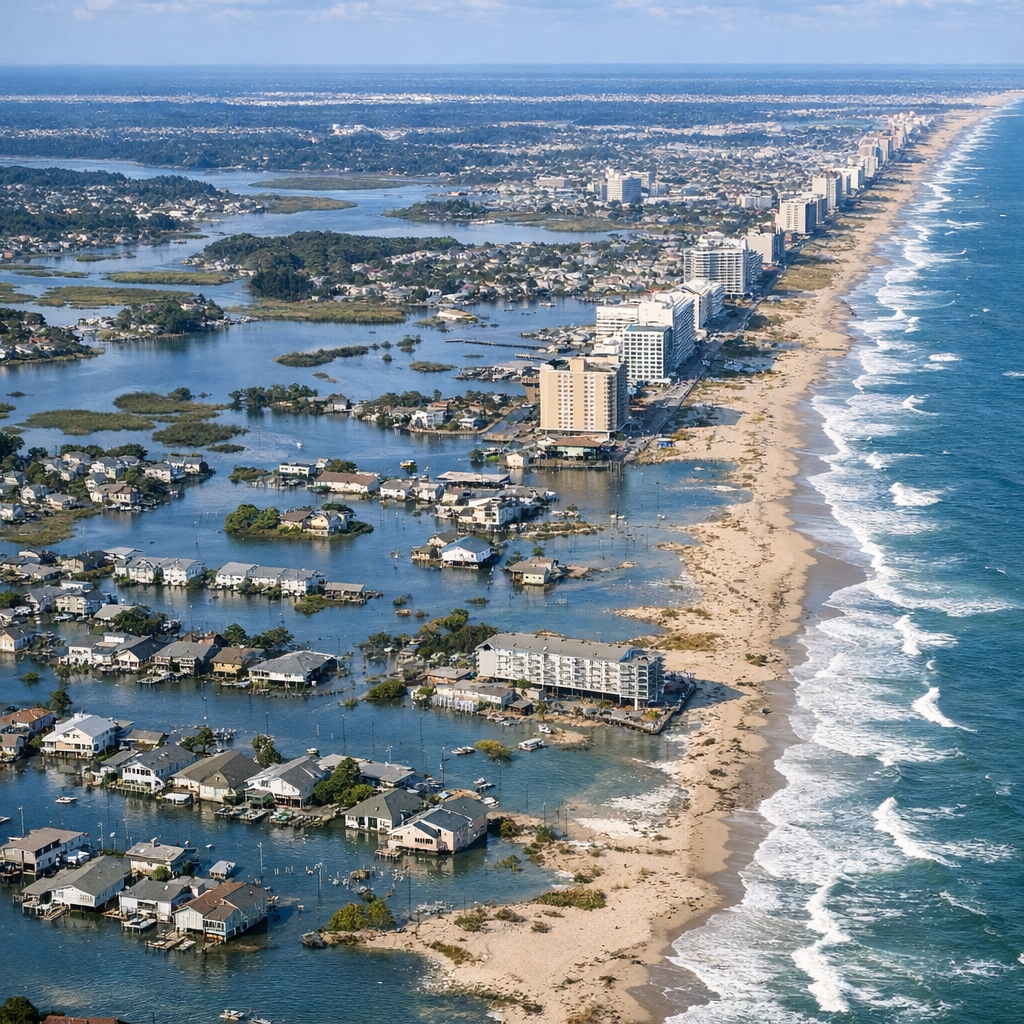
Virginia Beach, nestled between the Chesapeake Bay and the Atlantic Ocean, is experiencing significant challenges due to rising sea levels. This phenomenon is driven by a combination of global sea level rise and local land subsidence, making our region particularly vulnerable.
Causes of Sea Level Rise
Sea level rise results from factors such as the melting of glaciers and the thermal expansion of seawater as it warms. In our area, land subsidence—where the land gradually sinks—exacerbates the issue. Over the past century, the Hampton Roads region has seen sea levels rise by approximately 18 inches, a rate among the highest on the East Coast. Projections indicate an additional rise of 1.5 to 3 feet by 2060.
Impacts on Virginia Beach
The effects of rising sea levels are multifaceted:
- Increased Flooding: Higher sea levels lead to more frequent and severe flooding, affecting homes, businesses, and infrastructure.
- Coastal Erosion: Shorelines are eroding faster, threatening beaches and natural habitats.
- Saltwater Intrusion: Rising seas can lead to saltwater contaminating freshwater resources, impacting agriculture and drinking water supplies.
Local Responses and Adaptation Strategies
Recognizing these challenges, Virginia Beach has initiated several measures:
- Sea Level Wise Program: This comprehensive strategy aims to address flooding through infrastructure improvements, policy changes, and community engagement.
- Living Shorelines: Implementing natural solutions like marsh restorations to buffer against erosion and flooding.
- Community Education: Efforts to inform residents about flood risks and preparedness strategies.
As sea levels continue to rise, proactive planning and community involvement are essential to safeguard Virginia Beach’s future.